





A 100-year-old third-story deck that has been leaking into the sunroom below isn’t just a roofing problem — it’s a water intrusion problem that affects the living space directly underneath every time it rains. This Dayton homeowner had reached that frustrating point where the deck surface was clearly failing and the sunroom ceiling was paying the price. CPM ROOF assessed the existing EPDM rubber membrane, identified the failing wall termination and seam areas visible in the before photos, and delivered a Henry silicone coating system that restored full waterproofing protection with a 10-year warranty — without tearing the deck down to start over.
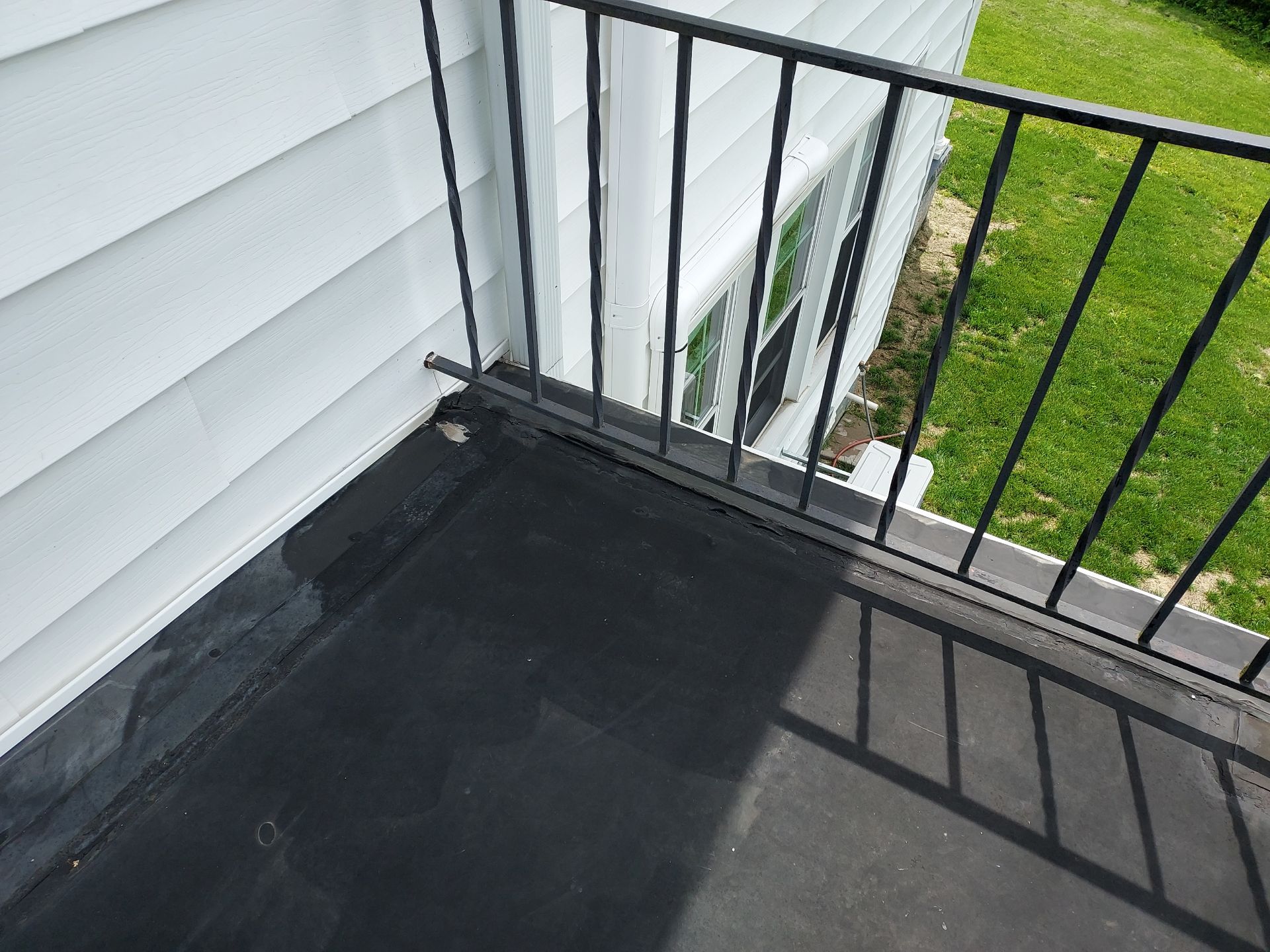
The photos tell the project story in close detail — the cracked, lifting termination flashing where the membrane meets the white vinyl siding, the compromised seam running along the wall base, and the freshly applied black coating visible mid-project as the new silicone membrane is worked into every corner and transition. Understanding why silicone coating was the right solution for this particular deck helps homeowners facing similar leak situations recognize an option that delivers lasting protection without the cost and disruption of full replacement.
The Challenge of a Third-Story Deck
Third-story deck waterproofing presents access and workmanship challenges that ground-level projects simply don’t carry. Working at elevation against a wall surface while managing the precise detailing that flat deck waterproofing demands requires experienced crews comfortable working carefully in tight conditions. The photos show the deck enclosed by a black iron railing system with the home’s white vinyl siding forming the back wall — a configuration where every inch of wall termination flashing must seal perfectly to prevent water from running behind the membrane and into the wall assembly below.
At 100 years old, this deck had outlasted the membrane technology of its original installation by decades, making the current deterioration a predictable outcome rather than a failure of any specific product. The goal for the new silicone system wasn’t to match what was there before — it was to deliver meaningfully better performance using modern coating chemistry designed for exactly this application.
Diagnosing the Leak Sources
The close-up before photos reveal the primary leak sources clearly — the membrane termination running along the base of the vinyl siding wall had lifted, cracked, and separated from the surface it was meant to seal. The seam visible in the second photo shows the characteristic pulling and bubbling that develops when EPDM ages past its elastic range and can no longer maintain adhesion at laps and terminations. Water entering behind this termination line was finding a direct path down through the deck assembly and into the sunroom ceiling below.
These edge and termination failures are the most common leak origin on aging flat deck surfaces because they represent the most stress-concentrated points on the membrane — where the material must simultaneously bond to two different surfaces, accommodate building movement, and resist water pressure at the lowest-profile transition on the deck. Diagnosing these points accurately before proposing a solution separates contractors who understand flat roofing from those who simply patch visible wet spots.
Why Henry Silicone Coating
Henry’s silicone coating chemistry was selected for this deck because silicone performs in conditions that defeat other coating types — particularly its ability to maintain full waterproofing integrity when water ponds on the surface. Third-story decks with iron railing perimeters can develop slow drainage situations where water sits against the wall termination areas for extended periods after rain events. Acrylic coatings soften and eventually degrade under sustained ponding, while silicone remains unaffected regardless of how long water remains in contact with the surface.
Silicone also maintains flexibility across a wide temperature range — an important characteristic in Dayton’s climate where summer heat and winter cold cycle the deck surface through significant expansion and contraction. This flexibility ensures the coating moves with the substrate rather than cracking as temperatures change, maintaining the watertight membrane integrity that the termination areas in particular demand.
Surface Preparation and Termination Repair
Before any silicone coating can be applied effectively, the existing membrane surface must be cleaned and any severely compromised areas — particularly the lifted termination flashing visible in the before photos — must be addressed to create a stable substrate for the new coating to bond to. The failing seam along the wall base was re-secured and treated to ensure the silicone coating applied over it had a consistent, properly adhered foundation rather than bridging over a loose membrane edge that would eventually re-fail beneath the new coating.
This preparation phase is where the durability of the finished system is actually determined. A silicone coating applied over inadequately prepared terminations and seams will eventually reflect whatever failures existed beneath it — making thorough prep work as important as the quality of the coating product itself.
Silicone Application Across the Deck Surface
The mid-project photos show the Henry silicone coating applied across the full deck field in a deep, consistent black layer that encapsulates the existing EPDM membrane and creates a new continuous waterproofing surface from wall to railing edge. The coating is worked carefully into every corner and transition — particularly at the critical wall base termination where the previous membrane had failed — ensuring complete coverage at the points most vulnerable to water entry. A bucket of Henry Pro-Grade coating visible in the working photo confirms the commercial-grade product selected for this application.
The black finish of the applied silicone against the white vinyl siding creates a clean, defined edge that visually confirms the coating has been brought fully to the termination line. Working the coating up the wall face and sealing it against the siding creates the continuous, overlapping membrane transition that prevents the edge-separation failures that had compromised the original installation.
The Finished Deck and 10-Year Warranty
The completed deck photos show the fully coated surface with outdoor furniture back in place — the teal patterned rug, iron bistro chairs, and glass side table that make this third-story space a functional outdoor living area for the homeowner. The black silicone surface running cleanly to every edge, termination, and corner presents a uniform, sealed membrane that will handle Ohio’s rain, snow, and freeze-thaw cycles through the full 10-year warranty period. For a homeowner whose sunroom ceiling had been receiving water for years, this outcome represents exactly the relief a properly executed waterproofing solution should deliver.
The 10-year warranty backing this installation covers a deck surface that had no warranty coverage at all before this project — a meaningful shift in the homeowner’s protection and peace of mind that makes the investment straightforward to justify.
Flat Deck and Roofing Waterproofing by CPM ROOF
Leaking flat decks, balconies, and low-slope roof areas require contractors who understand membrane waterproofing systems — how they fail, how they’re properly repaired, and when coating is the right answer versus full replacement. CPM ROOF serves Dayton, OH and the surrounding area with flat deck waterproofing, silicone coating systems, and comprehensive roofing services that address the actual source of water intrusion rather than treating symptoms. From century-old third-story decks to commercial flat roofs, every project receives the diagnostic attention and installation quality that produces results homeowners can count on for a decade and beyond. Contact CPM ROOF at (937) 860-2925 to schedule your flat deck or roof assessment.