




When a downtown Lebanon business owner called about installing a solar fan on his three-story commercial building, the conversation quickly expanded into a comprehensive solution that addressed every issue the aging flat roof was carrying. The original deteriorated surface visible in the before photo — cracked, granule-depleted, with standing water damage rings at every penetration — told the story of a roof system that had been asking for attention for years. CPM ROOF delivered a complete package: power washing the entire surface, repairing 20 feet of failing box gutter, coating all 30 squares with Henry commercial silicone, and installing a solar-powered attic ventilation fan. The result is a 10-year warranted roof system on a 130-year-old building that now breathes, drains, and protects like a new installation.
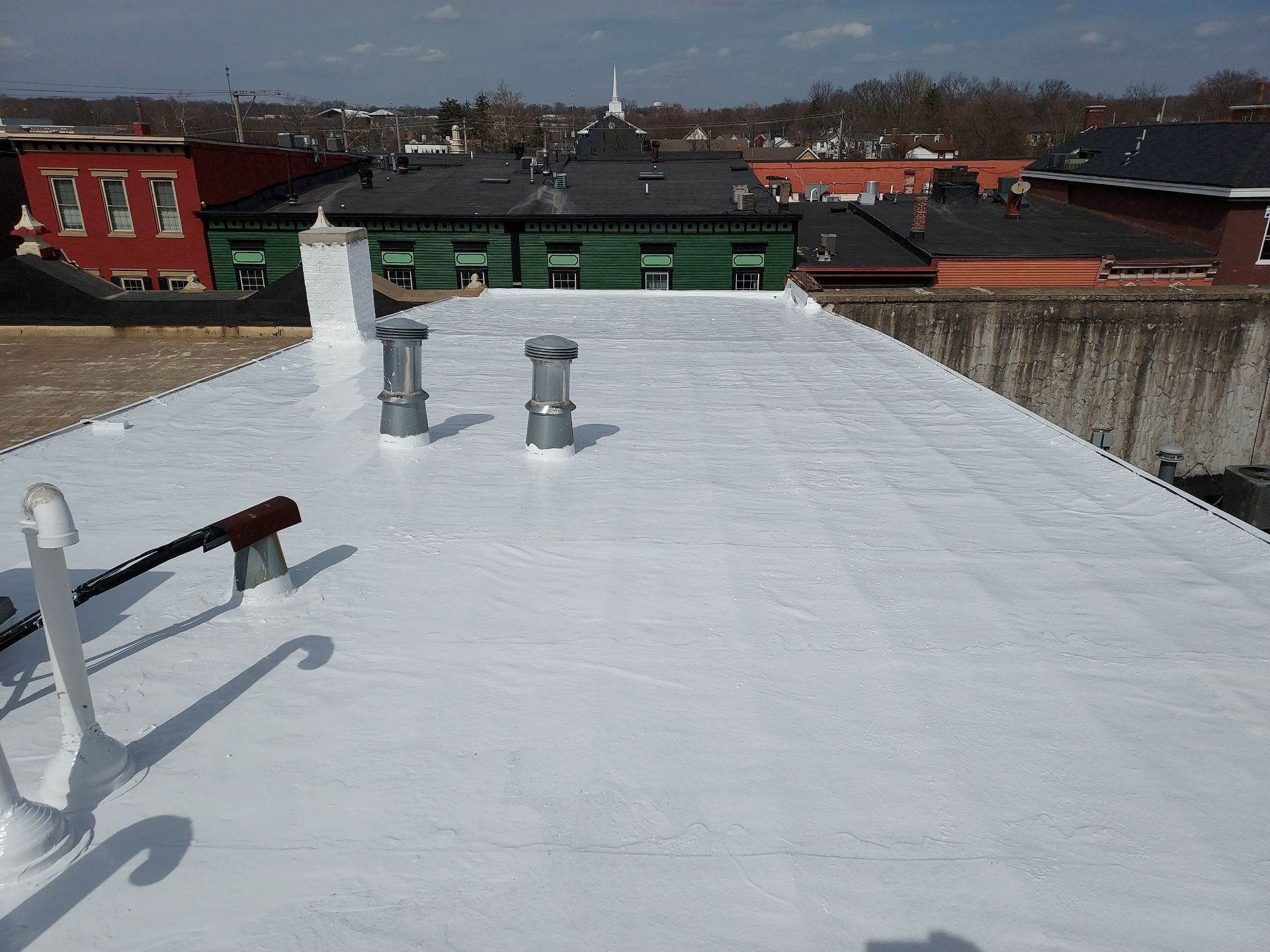
The project photos capture every phase — the deteriorated original surface, the bright white silicone coating transforming the roof plane, the solar fan set into the fresh coating, and the close-up of the box gutter repair work performed at elevation on the building’s parapet. Understanding why each element of this solution matters helps commercial property owners recognize what a properly maintained flat roof system actually requires.
The Condition of the Original Flat Roof
The before photo taken from the roof edge shows the original flat roof surface in significant decline — a heavily oxidized, sand-colored membrane with visible cracking patterns, disturbed areas around penetration bases, and the textured degradation that indicates a surface well past its effective service life. On a 130-year-old commercial building in a downtown setting, flat roofs accumulate decades of patches, repairs, and coating applications that eventually reach the point where the underlying system needs comprehensive treatment rather than another bandage. The multiple pipe penetrations visible across the surface each represented potential leak points without proper resealing.
The building’s position in Lebanon’s downtown district — visible in the rooftop photos overlooking the East Main Market and surrounding commercial blocks — adds urgency to maintaining the roof system, as water infiltration in a multi-story commercial building causes damage cascading through floors and tenant spaces below.
Power Washing and Surface Preparation
Before any coating adheres properly to a commercial flat roof, the existing surface must be thoroughly cleaned of dirt, biological growth, loose membrane material, and contamination that would prevent bonding. The power washing phase stripped the oxidized, sandy surface layer and prepared the membrane for silicone application by creating the clean, consistent substrate that coating manufacturers require for warranty validity. On a 30-square commercial roof three stories above street level, this preparation phase involves significant equipment and access management.
Proper surface preparation is the step that most determines whether a silicone coating performs for its full warranted life or begins peeling and failing within a few seasons. The bright, clean white surface visible in the completed coating photos reflects preparation work that produced the right substrate before a single bucket of silicone was opened.
Box Gutter Repair
The close-up photo taken at the building’s parapet edge reveals the condition of the original box gutter — a built-in trough gutter integrated into the parapet wall that had developed significant deterioration at its interior corner and along the vertical wall surface. Cracking, separation, and moisture infiltration visible in the gutter’s lining had reached the point where water was bypassing the drainage system and finding paths into the building’s wall assembly. Twenty linear feet of this box gutter received complete repair before coating began, addressing the water entry point that no amount of roof coating could fix if left unresolved.
Box gutters on historic commercial buildings present unique challenges — they are structural elements integrated into the building’s masonry rather than externally attached systems, making repair more involved than replacing a conventional gutter. The repaired gutter surface visible in the photo shows fresh material restoring the waterproof continuity of the trough before the silicone coating system was applied over the entire roof perimeter.
Henry Commercial Silicone Coating
The silicone coating system applied across all 30 squares of this flat roof is a Henry commercial-grade product — a moisture-cure silicone that builds a seamless, fully adhered waterproof membrane over the existing substrate. Henry silicone coatings are specifically engineered for commercial flat roof applications where ponding water is a routine condition, delivering a surface that maintains its waterproofing integrity even when water sits on the roof for extended periods. Unlike acrylic coatings that degrade with prolonged standing water exposure, silicone remains fully effective regardless of drainage speed.
The bright white finish visible across the completed roof serves a second critical function beyond waterproofing — it reflects solar heat rather than absorbing it, significantly reducing the roof membrane temperature on summer days and lowering the cooling load the building’s HVAC system carries. For a three-story commercial building with a 130-year-old attic space, this thermal benefit directly impacts energy costs every summer.
Solar-Powered Attic Ventilation Fan
The solar fan installation — the project element that initiated the entire conversation — is visible in the close-up photo as a sleek black square unit mounted on a curbed base set into the freshly coated white roof surface. The integrated solar panel on the unit’s top face powers the fan motor directly from sunlight with no electrical connection to the building required, making installation straightforward and operating costs nonexistent. For a 130-year-old building with an attic that has accumulated heat without mechanical ventilation for decades, this addition addresses a chronic problem that contributed to both comfort and structural aging in the space below.
Proper attic ventilation in commercial buildings reduces moisture accumulation that degrades structural members over time, lowers attic temperatures that transfer heat into occupied spaces below, and extends the effective life of roofing systems by reducing thermal cycling stress on membrane materials. The solar fan delivers all three benefits while operating entirely off-grid from the roof surface itself.
Penetration Sealing and Full System Integration
The completed roof photos show all pipe penetrations and ventilation equipment bases sealed into the white silicone coating, with the membrane running continuously up and over each curb and around each pipe flashing. This seamless transition between the flat field area and every penetration point is where most flat roof failures originate — and where the silicone system’s ability to be applied as a continuous coating rather than separate components provides its most significant waterproofing advantage. Each penetration visible across the two completed roof photos received proper detailing before the field coat was applied over it.
The multiple HVAC units and whirlybird ventilator also visible on the roof received properly sealed bases ensuring the coating system’s continuity wasn’t interrupted at the largest penetration points on the surface.
Commercial Flat Roof Solutions by CPM ROOF
Historic downtown commercial buildings carry the roofing challenges of age, decades of deferred maintenance, and building systems that were never designed with modern performance expectations in mind. CPM ROOF serves Lebanon, OH and the surrounding area with commercial flat roof coating, gutter repair, and ventilation solutions that address every issue comprehensively rather than treating symptoms one at a time. From Henry silicone coating systems and box gutter restoration to solar ventilation installation and 10-year warranty coverage, every commercial project receives the expertise and complete-solution thinking this Lebanon building owner experienced. Contact CPM ROOF at (937) 860-2925 to schedule your commercial roof assessment.