




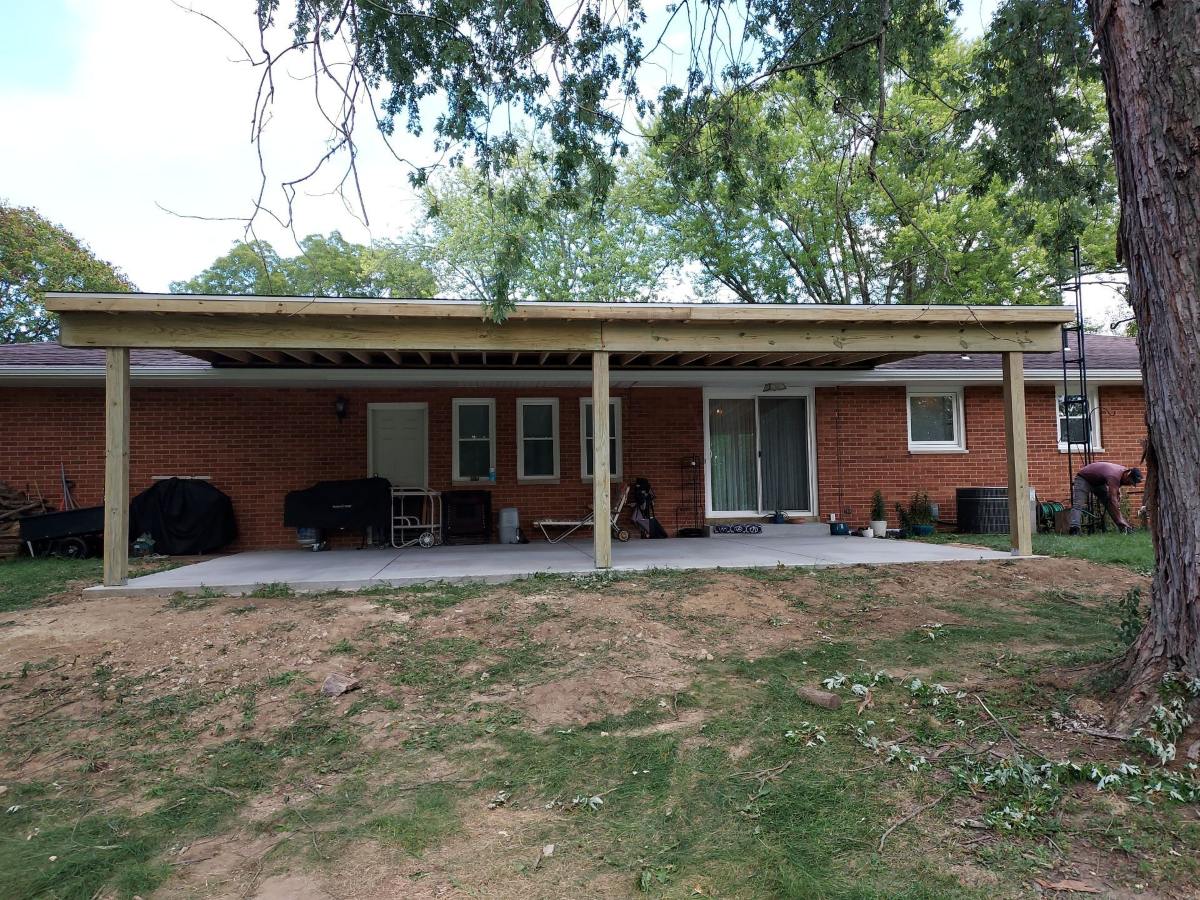

Expanding outdoor living space through a covered patio creates valuable area for entertaining, relaxation, and enjoying pleasant weather while protected from sun and rain. This project documents the complete construction of a substantial timber frame covered patio addition, from initial framing through finished structure. The exposed beam construction, quality lumber selection, and professional integration with the existing home demonstrate the craftsmanship required for outdoor structures that enhance both function and property value.
From foundation posts through roof attachment and ceiling installation, each phase requires specific expertise to ensure structural integrity and lasting performance. Understanding the construction process helps property owners appreciate the complexity involved in quality outdoor living spaces.
Planning and Design Considerations
Covered patios require careful planning regarding size, placement, and structural approach. This design features substantial dimensions creating generous covered space for furniture, grills, and activities. The attachment to the existing home provides structural support on one side while requiring substantial posts and beams to support the free-standing edge.
The roof pitch must coordinate with existing roof lines while ensuring proper water drainage. The attachment point visible where new rafters meet the existing house requires careful flashing and integration to prevent water intrusion. Building codes govern structural requirements, setbacks from property lines, and height restrictions that influence design options.
Foundation and Post Installation
The substantial posts visible supporting the patio structure require proper foundations preventing settling or movement. Concrete footings extend below frost lines, providing stable bases that won’t shift through seasonal freeze-thaw cycles. The posts themselves appear to be 6×6 or larger pressure-treated lumber capable of supporting the roof structure’s weight plus snow and wind loads.
Post placement determines the covered area’s dimensions and influences the beam spans required. The spacing visible here creates an open, airy feel while providing adequate structural support. Proper attachment methods securing posts to concrete footings and connecting beams to posts ensure the structure can handle anticipated loads safely.
Beam and Joist Installation
The heavy beams spanning between posts and the house create the structural framework supporting roof joists. These large dimensional timbers carry substantial weight, requiring careful sizing based on span distances and anticipated loads. The beam visible resting on posts demonstrates the scale of lumber necessary for structures of this size.
The roof joists running perpendicular to beams create the structure that roof sheathing attaches to. The regular spacing visible in construction photos ensures adequate support for roofing materials. Professional builders calculate joist sizes and spacing based on roof loads, local building codes, and material specifications to ensure adequate strength.
Roof Sheathing Application
The OSB (oriented strand board) roof sheathing visible in construction photos creates the solid surface that underlayment and shingles attach to. This engineered wood product provides strength and dimensional stability while being more economical than solid wood planking. The sheathing panels must be properly fastened to joists and spaced slightly to allow for expansion.
The leaf blower visible on the roof suggests debris cleanup during installation. Professional installations maintain clean work surfaces ensuring proper adhesion of roofing materials. The staged material delivery visible with wrapped shingle bundles demonstrates organized project management keeping materials protected until installation.
Integrating with Existing Roof Structure
The attachment point where new construction meets the existing house represents a critical detail requiring expert flashing work. The rafters visible extending from the existing roofline demonstrate how the new structure ties into the home. This connection must be watertight while allowing for thermal expansion differences between new and existing materials.
Proper ledger board installation, flashing, and integration with existing roofing prevents the leaks that commonly occur where additions meet main structures. The visible coordination between new framing and existing roof pitch shows careful planning ensuring water sheds properly off both surfaces.
Exposed Beam Ceiling Design
The underside views showcase the exposed beam ceiling design that creates visual interest and natural wood warmth. The dimensional lumber joists, beams, and decking remain visible rather than being concealed behind finished ceiling materials. This design approach highlights the craftsmanship while creating an open, spacious feeling beneath the patio roof.
The OSB sheathing visible from below will be covered by roofing materials on top while remaining exposed underneath. Some installations might add tongue-and-groove wood planking or other finished ceiling materials, but the exposed structural approach shown here offers rustic appeal appropriate for outdoor living spaces. The natural wood tones complement the brick home exterior.
Roofing Material Installation
The architectural shingles being installed match the existing home’s roof, creating visual continuity between old and new construction. Matching roofing materials helps the addition look like an original part of the home rather than an obvious add-on. The wrapped shingle bundles visible on the roof await installation following proper underlayment application.
Quality roofing installation over the covered patio requires the same attention to detail as the main house roof. Proper underlayment, starter strips, and correct shingle overlap ensure weather protection. The edge details and valley work where the patio roof meets existing roof lines demand particular expertise preventing future leak problems.
Structural Engineering and Load Calculations
Structures of this scale require engineering calculations ensuring adequate strength for anticipated loads. Snow loads in Ohio demand substantial roof structures capable of handling heavy accumulations. Wind loads also factor into design, particularly for the exposed free-standing edge furthest from the house.
Building permits typically require stamped engineering plans for covered patio additions. Professional builders work with engineers or use prescriptive code tables determining appropriate member sizes, fastener specifications, and connection details. This engineering ensures safety while preventing over-building that wastes materials and money.
Finishing Details and Trim Work
The completed structure shows clean lines and professional finishing. The exposed post and beam construction receives final sanding and potential staining or sealing protecting wood from weather while enhancing appearance. Fascia boards along roof edges provide finished appearance while supporting gutters if added later.
The connection between posts and beams demonstrates quality joinery creating both structural integrity and visual appeal. Professional installations feature tight joints, proper fastener placement, and attention to details that separate quality work from amateur construction.
Functional Benefits of Covered Patios
The completed covered patio transforms the outdoor space visible in the finished photos. The generous area accommodates furniture, grills, and activities while providing protection from sun and rain. The shade created by the roof structure makes the space usable during hot summer days when unshaded patios become uncomfortable.
Protection from rain allows furniture to remain outdoors without constant covering and uncovering. The covered area extends the outdoor entertaining season into cooler months and light rain conditions. This functional expansion of living space adds substantial value both in daily use and property resale value.
Property Value Enhancement
Quality outdoor living space additions provide excellent return on investment through enhanced property values. Covered patios appeal to buyers seeking outdoor entertaining space and low-maintenance outdoor rooms. The professional construction quality visible in this project ensures the addition enhances rather than detracts from property value.
Beyond monetary value, covered patios improve quality of life by creating comfortable outdoor spaces that get used regularly. The investment transforms previously underutilized yard space into functional outdoor rooms that become favorite gathering spots for family and friends.
Professional Construction Expertise
Building covered patio additions requires contractors experienced in structural carpentry, roofing integration, and outdoor construction techniques. CPM ROOF brings comprehensive capabilities to covered patio projects throughout Miamisburg, OH, ensuring structures are properly engineered, built to code, and finished to high standards.
Quality outdoor construction demands understanding of weather exposure, material selection for outdoor use, proper fastening techniques, and integration with existing structures. Professional contractors coordinate permitting, engineering, material selection, and skilled installation creating outdoor living spaces that enhance properties for decades. Contact CPM ROOF at (937) 860-2925 for expert covered patio construction services.