



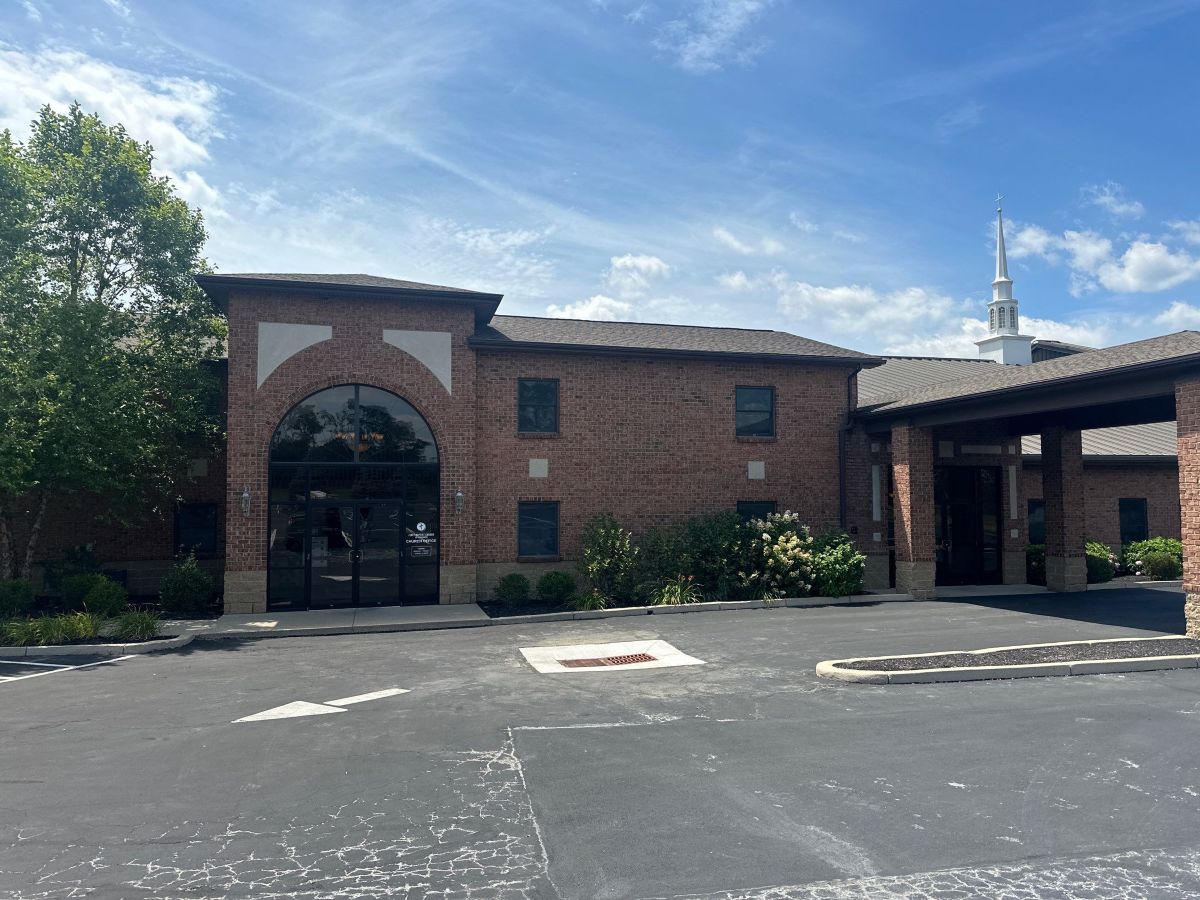

A roof leak in a community building is more than just a nuisance—it is a constant disruption to the people who gather there. For this large, beautiful brick church located in Springboro, Ohio, a persistent leak in the main entryway had been causing structural and cosmetic headaches for years. Despite multiple repair attempts by others in the industry, water continued to find its way inside the building during heavy rainstorms. The moisture threatened the interior drywall and created a consistently unwelcoming environment at the building’s primary gathering point. Every time it rained, the main doors became a hazard, forcing members to navigate around buckets and wet floors.
When the church committee finally requested our help, they were understandably frustrated and looking for a permanent, reliable solution. They needed a team that could properly diagnose the root cause of the water intrusion and rebuild the failing sections from the decking up. Our crews took on the challenge, systematically tearing apart the compromised areas and installing a high-performance GAF HDZ Dimensional shingle system to finally stop the leak and give the congregation peace of mind.
Diagnosing a Complex Multi-Section Leak
Water is notoriously difficult to trace, especially on a large structure with intersecting rooflines. The entryway of a large church typically features complex transitions where sloped roofs meet vertical walls, extending porticos, and exterior siding. If the flashing is improperly installed or the underlayment has degraded over the years, water will travel along the path of least resistance. It often migrates far from the actual point of entry before finally dripping through the ceiling inside.
In this specific case, the previous repair attempts had likely only addressed the surface-level symptoms rather than the underlying structural failures. Our initial inspection revealed that the intersection between the entryway roof, the main structure, and the adjacent siding was the primary culprit causing the water infiltration. To solve the problem permanently, applying a simple patch of sealant or replacing a few top-layer tabs was not going to be enough. We needed to strip the affected areas completely down to the bare wood and rebuild the entire waterproofing system from scratch.
Tearing Down to the Bare Wood
The only way to guarantee a watertight seal on a complex architectural transition is to fully expose the structural decking underneath. Our crews got to work meticulously tearing apart three distinct sections of the roof surrounding the main entryway.
Removing the old, saturated materials allowed us to closely inspect the plywood decking for any hidden water damage or wood rot that had accumulated over the years of active leaking. Stripping the surface down also gave us a completely clean slate to apply modern waterproofing barriers. In a critical, highly visible area like an entryway portico—especially one on a sprawling brick building featuring a towering steeple—ensuring the structural foundation is completely solid is the most important step in the entire installation process. Without a healthy wooden deck, no shingle system can perform correctly.
Installing Ice and Water Shield for Maximum Protection
With the decking exposed and fully prepared, our next crucial step was to install a heavy-duty ice and water shield. Standard roofing felt is highly effective for shedding water on a steep, uniform slope, but in high-risk areas like valleys, pitch transitions, and wall intersections, a self-adhering membrane is absolutely mandatory to prevent future failures.
We applied the ice and water shield aggressively across the three torn-down sections. This specialized, rubberized barrier bonds directly to the wooden decking and seals tightly around all shingle fasteners as they are driven in. By laying this thick, waterproof membrane across the most vulnerable transition points of the church entryway, we created an impenetrable secondary line of defense. Even if wind-driven rain managed to push under a shingle during a severe midwestern storm, the ice and water shield would prevent that moisture from ever reaching the building’s interior space.
Siding Detachment and Proper Flashing Integration
One of the most common reasons entryway and portico roofs leak is poor integration between the roofing materials and the adjacent siding. If step flashing is missing, damaged, or simply caulked over by previous contractors, water running down the vertical siding will easily slip behind the shingles and enter the wall cavity.
To correct the previous installation errors, our crew carefully detached the vinyl siding where the roof met the vertical walls. Removing the siding allowed us to install proper metal step flashing and integrate it flawlessly with the newly applied ice and water shield. Once the step flashing was securely in place and properly overlapped with the underlayment courses, we meticulously reattached the vinyl siding. This extra layer of installation discipline ensures that rainwater cascading down the walls is directed out and over the roof surface, completely closing off the vulnerabilities that had plagued the building for years.
Upgrading to GAF HDZ Dimensional Shingles
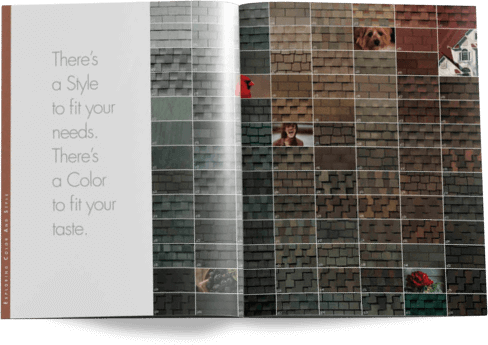
With the heavy-duty underlayment and precise flashing details locked in perfectly, it was time to install the final weathering surface. We upgraded the torn-down sections using premium GAF HDZ Dimensional shingles, providing the property with an elite level of protection that will last for decades. Selecting the right shingle is just as important as the installation process itself, especially for a community building that sees heavy foot traffic.
These architectural shingles are renowned for their incredible durability and advanced locking technology. They feature a patented nailing area, which provides industry-leading fastener accuracy and massive wind uplift resistance. This is a crucial performance metric for a large, elevated structure that catches significant wind shear. Visually, the dimensional profile of the GAF HDZ line added a rich, textured appearance that perfectly complemented the traditional brick exterior of the church. The expansive, newly shingled slopes blend seamlessly with the rest of the architecture while providing vastly superior weather defense.
A Permanent Solution for the Congregation
The ultimate measure of success on any exterior restoration project is the performance of the roof during the next major storm. After years of dealing with persistent water intrusion and failed repair attempts by other contractors, the church finally has a completely dry entryway. The comprehensive teardown, combined with the premium shingles and meticulous flashing integration, stopped the leak for good.
The church leadership was incredibly happy to finally resolve the issue, allowing them to welcome their congregation without constantly worrying about water damage. If your commercial property or home is suffering from a stubborn leak that others cannot seem to fix, it is time for a professional, structural intervention. Reach out to CPM today to schedule a comprehensive evaluation, and let our experienced crews rebuild your defense against the elements the right way.